
.png)

A simple system couples actually stick to.
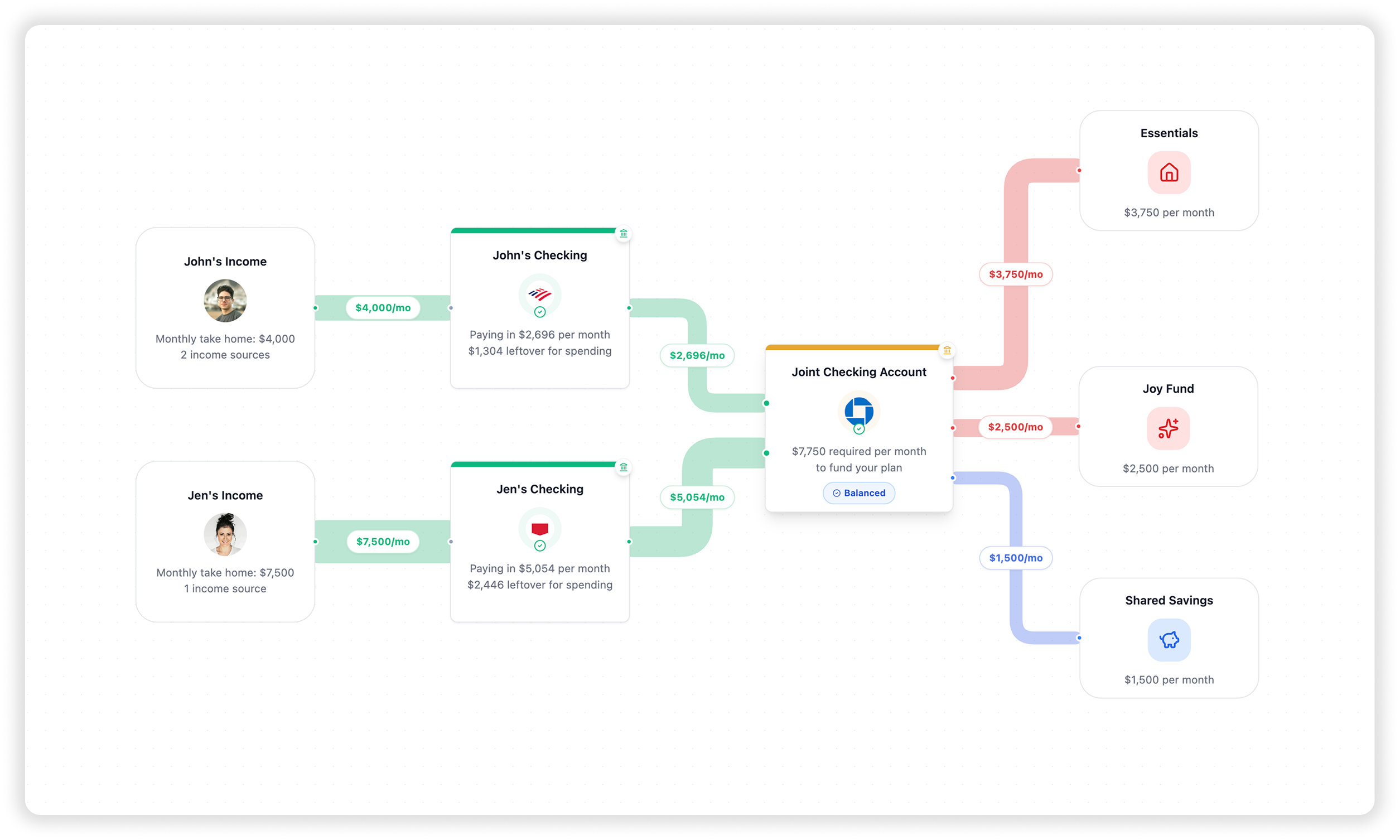
Couples usually go one of two ways: keep everything separate or combine it all. We think there's a better option in between. Each partner pays in their fair share toward shared expenses and goals. The rest stays yours.


Know exactly what you each contribute and why.
JoyFi builds your shared financial plan step by step based on your real incomes and expenses. No spreadsheets. No guessing what's fair.
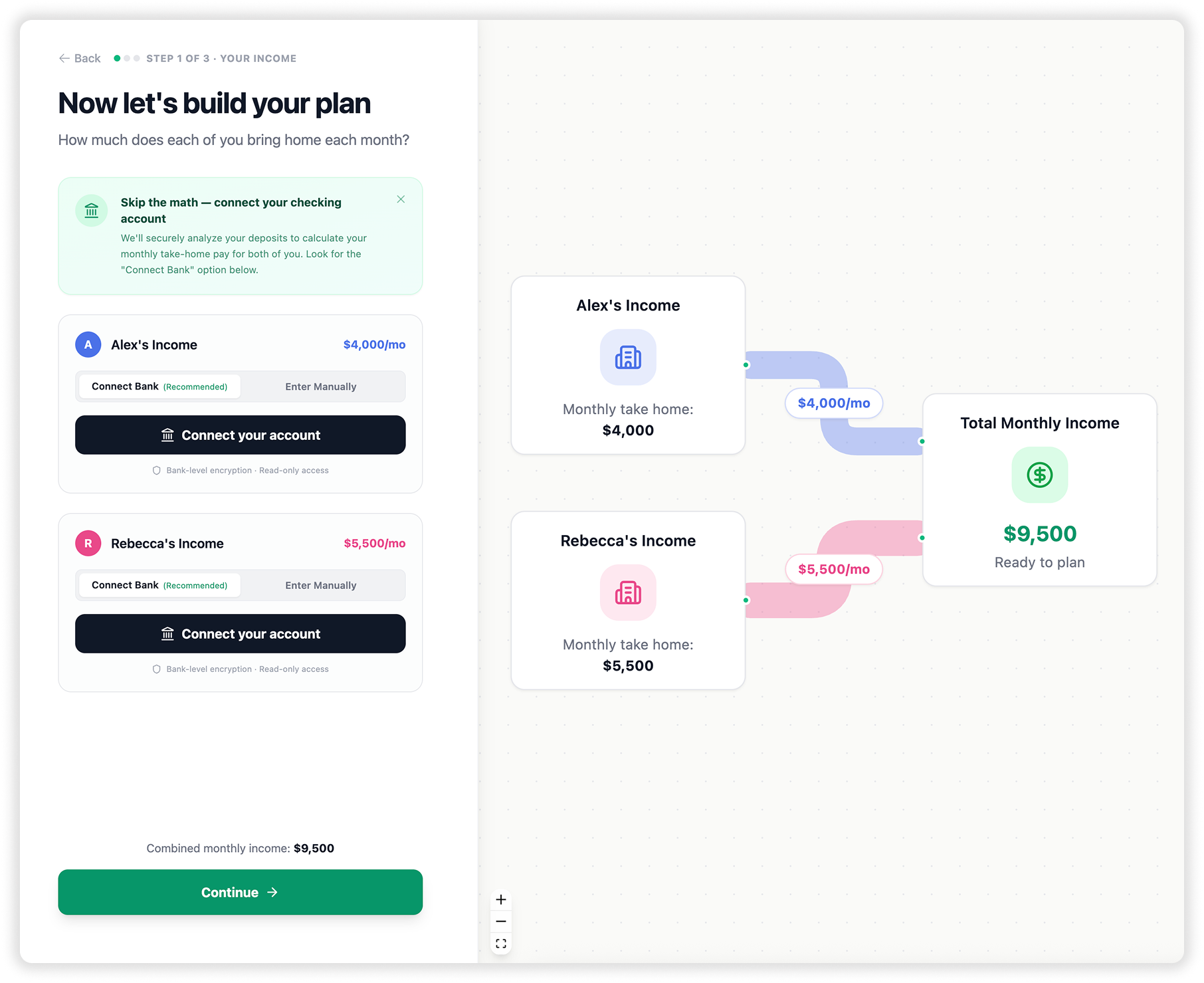
The right balance of transparency and independence.
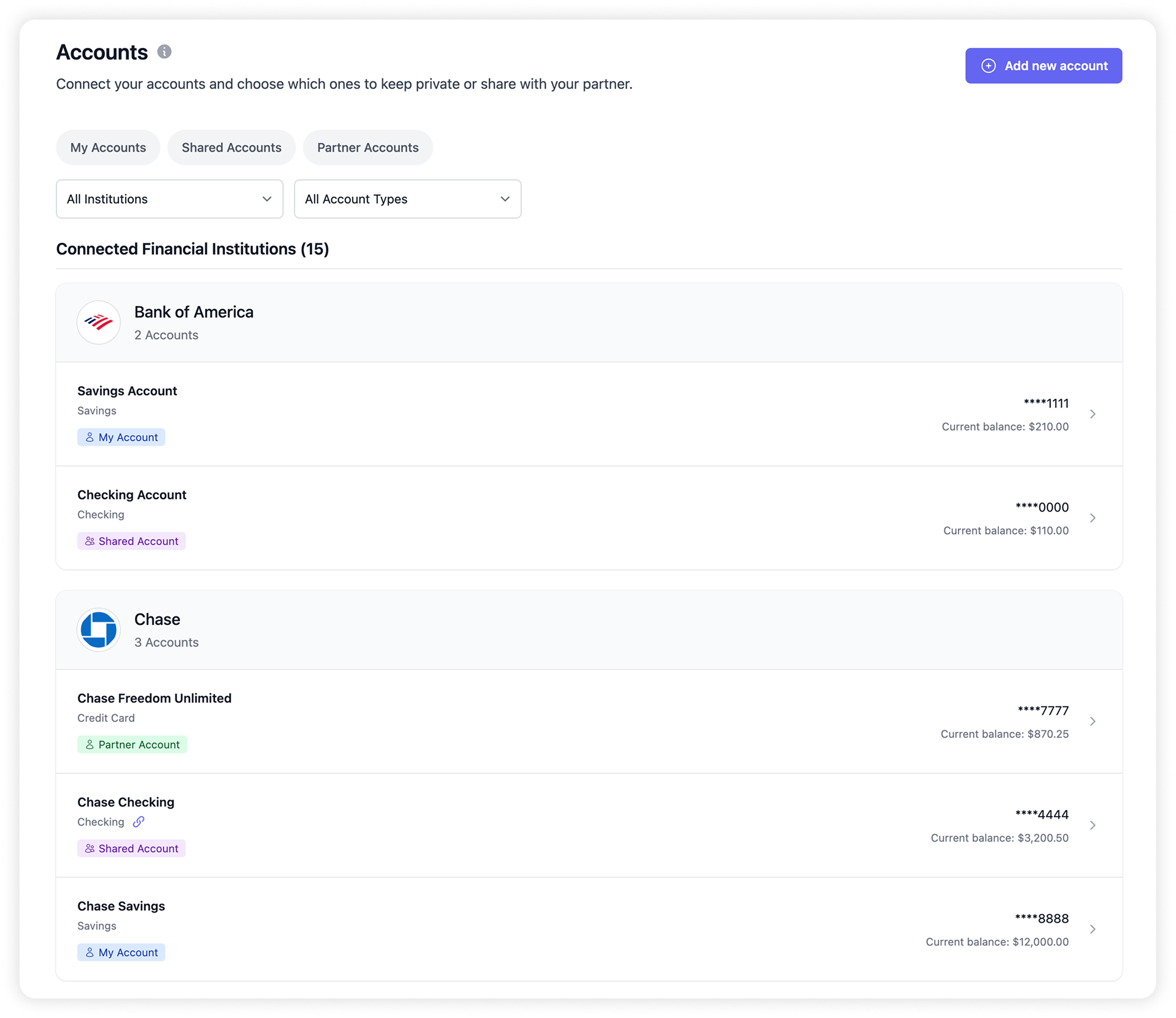
A healthy financial relationship balances transparency with independence. Connect your accounts and mark each one as personal or shared.
Your partner sees all account balances, but personal transactions stay private. As long as you're both contributing your fair share, what you spend the rest on is your own business.

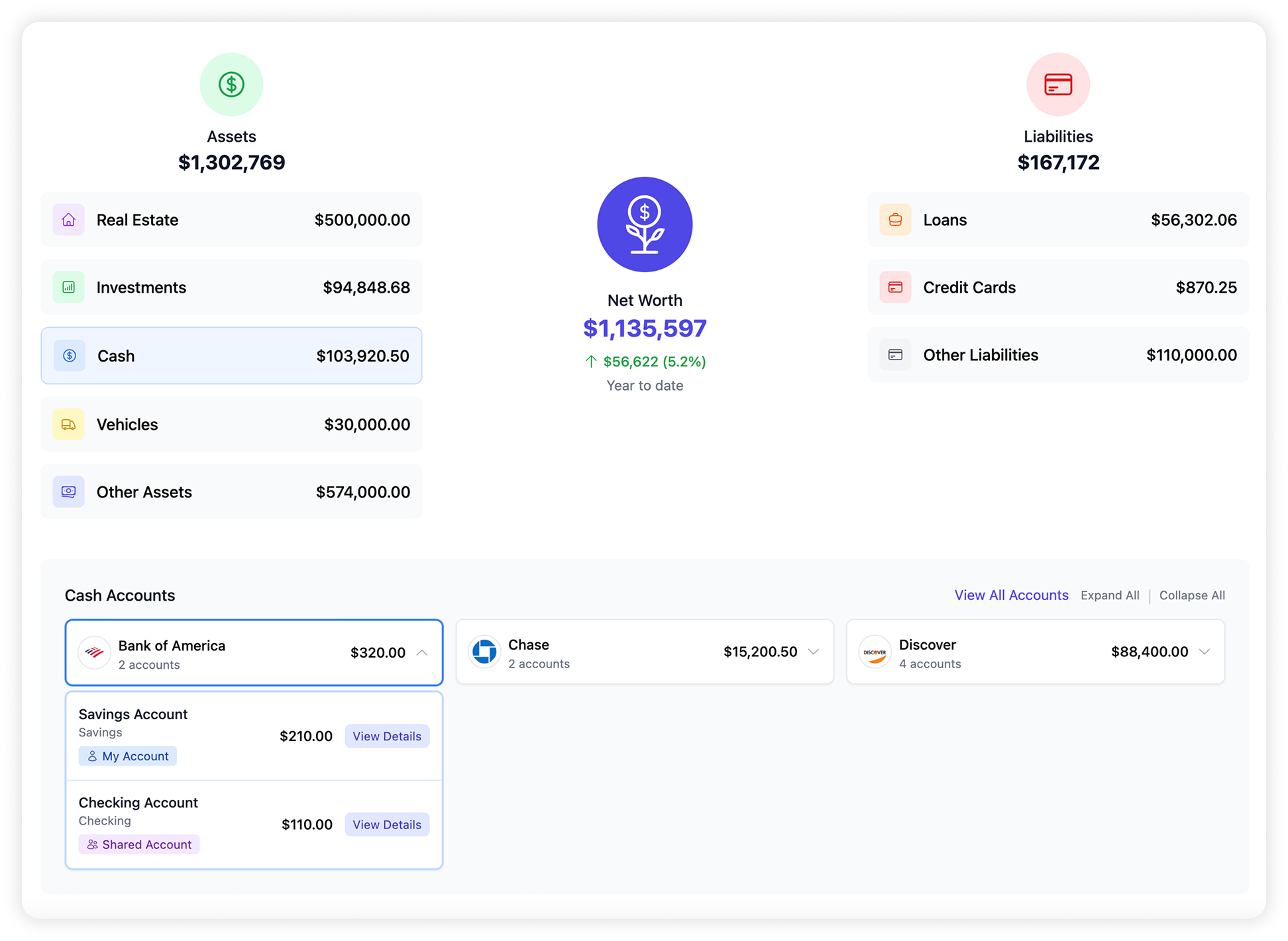
Always know where you stand together.
Most couples have no idea what their combined financial picture actually looks like. JoyFi puts it all in one place: assets, debts, shared accounts, and personal accounts. You both always know where you stand. No blind spots. No surprises.
Every couple gets to the money conversation eventually. Starting early makes it a lot easier.

Just got engaged?
Congratulations! At some point soon someone’s going to ask: “so how are we going to handle money?” It’s one of the most important conversations you’ll have and most couples have no idea where to start.
JoyFi gives you a clear, fair system before the question becomes a source of tension. You’ll both know what’s shared, what stays personal, and what you’re building toward together.


Just married?
Being married doesn’t come with a manual for how to handle money together. Most couples figure it out as they go, which usually means one person takes on more of the mental load, or nobody does and it becomes a source of tension.
JoyFi gives you a shared plan from the start. Fair contributions, clear expectations, and a system that keeps you both on the same page without requiring a weekly money meeting.


Just moved in together?
Sharing a place is when money gets real. Who pays for what? How do you split things fairly if your incomes are different? What happens when one person wants to save and the other wants to spend?
JoyFi answers those questions with a system that feels fair to both of you, so you’re not making it up as you go.

What couples who've been through it say
Married Couple
"We really like how you can set different sharing levels on your accounts. Just because we are managing finances together doesn't mean my husband needs to see every single personal purchase I make. At the same time I'm not trying to hide anything either. The app strikes the right balance for us."
Engaged Couple
"When we got engaged we wanted to get serious about managing our finances together and had no idea how to start. So glad we found this tool it helped us get started and helps us stay on the same page."
Married Couple
"NO MORE SPREADSHEETS! Yes yes yes."
Married Couple
"We love using JoyFi we've tried other tools out there that claim they are for couples but it felt like the 'couple' part was an afterthought."
You stay in control of your money.
JoyFi is built around a few things we think really matter.

We never move any of your money
JoyFi is a planning and visibility tool. We never initiate transfers, move funds, or touch your accounts. You stay in full control of every dollar.

Personal spending stays private
Your partner sees balances on all accounts but only sees transactions from accounts you choose to share. What you spend your personal money on is your own business. (This is great for buying each other gifts!)

No wrong way to get started
JoyFi guides you through every step. You can adjust your plan, your contributions, and your account permissions at any time. Nothing is permanent.

You can start builiding your plan on your own
A lot of couples build the plan solo first and invite their partner once there is something concrete to look at. Your partner gets their own separate account and joins when you are both ready.
.svg)
Your data is always protected
JoyFi connects your accounts through Plaid, the same technology used by Venmo and ChatGPT. We never see or store your bank login credentials. We use bank-grade encryption and your data is never sold to third-parties.

Frequently Asked Questions
Is it too soon to think about this?
Most couples wish they had set up a system earlier, before habits formed and expectations went unstated. There is no wrong time to get on the same page about money. If you just got engaged or just moved in together, right now is actually the best time. It is much easier to build a fair system from the start than to fix one that is already causing tension.
Will this cause more arguments about money?
It tends to have the opposite effect. JoyFi takes the opinions out of money conversations. Fair contributions are calculated automatically based on your actual incomes, not whoever argues loudest. Most couples find that having a clear shared system reduces money tension rather than increasing it. You are not guessing anymore.
Will my partner be able to see everything I spend?
No. JoyFi shows both partners all account balances for a complete financial picture, but personal transactions stay private. Your partner only sees spending from accounts you choose to share. What you do with your personal money is your own business, as long as you are both contributing your fair share to the plan.
Do we have to combine all of our finances to use JoyFi?
No. JoyFi is built around the idea that combining everything is not right for all couples. You keep your own accounts. Your personal spending stays private. You only share what you choose to share. The whole point is that you can feel like a financial team without losing your individual financial independence.
We already sort of have a system. Do we really need this?
If it is working, great. But most informal systems, even well-intentioned ones like checking in on purchases over a certain amount, still create a permission dynamic. Nobody wants to feel like they need to justify buying something with their own money. With JoyFi's Pay-In model, once you have both contributed your fair share, what you do with the rest is completely yours. No check-ins. No justifying. No guilt. Just a clear line between what is shared and what is personal.
Can I set up JoyFi by myself, or should we start together?
Either works. A lot of couples find it easier to build the plan first and show it to their partner once there is something concrete to look at. Start on your own, get the plan set up with your best estimates, and invite your partner when you are ready. Everything is editable.
How does JoyFi connect to my bank account securely?
JoyFi connects your accounts through Plaid, the same technology used by Venmo, ChatGPT, and thousands of other financial apps. Plaid provides read-only, encrypted access to your account data. JoyFi never sees or stores your bank login credentials. Your data is encrypted and never sold to third-parties. You can disconnect your accounts at any time.
How much does it cost?
JoyFi is $15 per month for both of you ($12 per month for yearly plans). Most couples start with the basics: what is fair, what is shared, what stays personal. JoyFi helps you get that foundation right and stays with you as your financial life together grows. We keep your experience ad-free and never sell your data. You can try it free for 14 days, no credit card required.
What if my partner is not on board yet?
Start on your own. Build out the plan with your information, see what your contributions would look like, and show it to your partner when it is concrete. Seeing real numbers in a real plan is usually more persuasive than trying to explain the idea from scratch. You can adjust everything once your partner joins.